Wothan Escape: A Masterclass in Kinetic Navigation and Hazard Mitigation
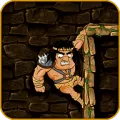
If you think Wothan Escape is just a simple game of "running through a temple," you haven't mastered the Vertical Displacement Calibration and Static-to-Dynamic Hazard Intercepts required for its veteran difficulty tiers. This title is a sophisticated exercise in Spatial Precision and High-Frequency Platforming Logic. You are tasked with navigating a high-output barbarian unit through a "High-Lethality Environmental Corridor," where success depends on your ability to maintain a consistent "Transit Velocity" without intersecting with localized death-zones like floor spikes or treacherous gaps. What makes Wothan Escape a standout on Gamesvio is its "Structural Complexity Scaling"—as you descend deeper into the temple, the layouts transition from linear paths to "Logic-Gate Gauntlets" that require millisecond-level timing to survive.
In this high-stakes archaeological gauntlet, your biggest enemy isn't the distance—it's Input Over-Correction. Whether you are executing a "Precision Jump" over a spike trap or managing a "Tight-Space Maneuver," success depends on your ability to treat every floor as a Prioritized Risk Grid.
The "Vector-Control" and Risk-Reward Optimization Strategy
To dominate the leaderboards and achieve a "Grandmaster Explorer" ranking, you must implement the "Vector-Control" Strategy:
Vertical Displacement Calibration (The "Apex" Rule): Stop jumping at maximum height for every gap. In Wothan Escape, your character is most vulnerable while in the air because your horizontal trajectory is fixed. Use "Short-Hop" techniques for narrow gaps to minimize your "Air-Time," allowing you to regain ground-control faster and react to the next obstacle immediately.
Static Hazard Mapping (The Spike-Buffer Principle): Every spike trap has a specific Collision Hitbox. Learn to identify the "Zero-Pixel Margin"—the exact distance from the edge of a trap where your character can stand without triggering a collision. By mastering this buffer, you can execute jumps from the absolute edge of a platform, maximizing your horizontal reach for complex layouts.
Risk-Reward Coin Acquisition: Coins are placed to test your "Spatial Greed". Do not break your rhythmic flow for a single coin. Instead, use them as "Pathfinding Anchors"—only collect coins that align with your natural "Kinetic Path" to the exit. This ensures you maintain high scores without compromising your survival probability.
Temple Specialist Field Intelligence (FAQs)
Q1. Why does the movement feel "Heavier" during high-speed escape sequences?
This is a mechanical simulation of "Kinetic Momentum". As your speed scales, the recovery time between a jump and a landing increases. To counter this, focus on "Predictive Positioning"—start your jump command two frames earlier than you think is necessary to account for your character's forward inertia.
Q2. How do I handle "Tight-Space Gauntlets" where hazards are closely packed?
These are "Rhythm-Break Hazards". The secret is "Linear Patience". Avoid rushing; instead, treat these sections as a "Turn-Based" puzzle. Wait for the trap's oscillation or the clear gap to appear, then use a single, high-precision input to clear the zone. Rushing through tight spaces is the #1 cause of run-failure on the Gamesvio leaderboards.
Q3. Is there a "Speed-Run" multiplier for fast level completion?
Yes. One of the best ways to climb the rankings is the "Efficiency Bonus". Completing a temple level while maintaining a "Constant-Forward State" (never stopping) triggers a score multiplier. Maintaining this "Kinetic Flow" is the secret to reaching "Elite Class" rankings.
Q4. Is the game optimized for high-intensity mobile platforming?
Absolutely. Wothan Escape is built on a High-Performance HTML5 Logic Engine specifically optimized for "Raw Touch-Input Polling". To ensure the most accurate control during chaotic temple levels, we recommend playing in Portrait Mode. This orientation provides a superior view of the "Vertical Layout Horizon," which is essential for calculating the long-range jumps required in the "Deep-Temple" difficulty levels.






























 Action & Adventure
 Arcade & Run
 Puzzle & Logic
 Sports & Racing
 Casual & Fun